Abu Dhabi’s approach to urban development reaches into how people travel, use public services and plan business events. Digital government, autonomous taxis, energy-efficient buildings and virtual destination tours are all part of this change.
The key future city initiatives in Abu Dhabi address practical needs. Some help residents access services. Others give businesses new ways to explore the emirate or reduce the energy required to run a building. Here are four examples and what they mean for the people using them.
The Abu Dhabi Government Digital Strategy 2025–2027 sets out an AED 13 billion investment in digital infrastructure and technology adoption. Led by the Department of Government Enablement, it aims to integrate AI across government services and operations.
Its targets include digitising and automating all government processes and achieving full adoption of sovereign cloud computing for government operations. The strategy also includes more than 200 AI solutions across public services, alongside training through the AI for All programme.
For residents and businesses, the purpose is practical: make government services easier to access and processes more efficient. The strategy builds on existing developments such as TAMM 3.0, connecting new technology with services people already use.
Choosing an event location involves more than finding a suitable room. Organisers also need to understand the surrounding hotels, dining options, attractions and transport routes.
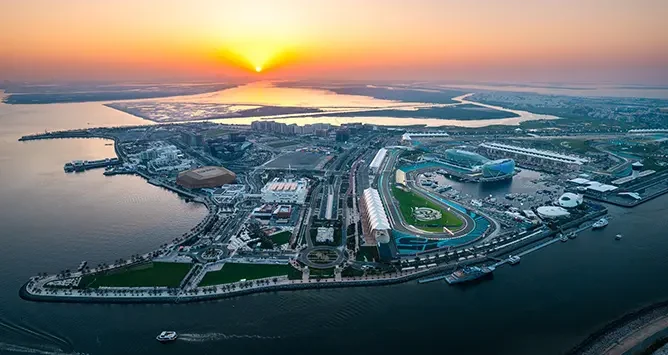
In October 2025, Miral and e& enterprise announced the launch of the Yas Island Metaverse, pioneering an interactive approach to virtual business event planning on Yas Island. Accessible through web browsers, the platform allows potential business partners worldwide to explore the island’s event spaces, hotels, restaurants and attractions remotely. The initiative aligns with the digital transformation pillar of Abu Dhabi’s Tourism Strategy 2030.
The platform allows organisers to explore business event venues through virtual walkthroughs, use customisable avatars for site reviews and simulate driving routes around the island. They can return for multiple virtual visits as their plans develop.
This changes the early planning experience. Partners can explore the destination remotely, revisit spaces and consider routes before travelling to Abu Dhabi. Seeing venues alongside hotels, restaurants and entertainment also helps them understand how different parts of an event programme could fit together.
The value lies in giving organisers a more detailed basis for planning discussions. It brings destination information into an interactive setting and makes Yas Island accessible to prospective partners wherever they are.
Autonomous transport is another area where Abu Dhabi is moving from testing to public use. In November 2025, the Integrated Transport Centre announced commercial operations for fully driverless Level 4 vehicles, following safety assessments and operational trials.
A further announcement in March 2026 confirmed the expansion of autonomous taxi operations on Yas Island. This involved Apollo Go and local operator AutoGo, with the service available through the AutoGo app.
For passengers, this introduces another way to travel within the service area. For the emirate, it builds operational capability for autonomous vehicles on public roads. The Integrated Transport Centre oversees operations through a digital platform that supports live vehicle tracking and incident monitoring.
Future city initiatives in Abu Dhabi also address the buildings where people work. At Masdar City, NZ1 demonstrates how building design and on-site renewable energy can work together.
Completed in 2023, the commercial building was designed to consume 53% less energy than an equivalent conventional building. Its solar panels were designed to generate 101% of its annual energy requirements.
The approach starts with reducing demand. Angled and shaded windows limit direct sunlight while admitting natural light. Insulation and an airtight exterior help keep heat out and cooled air inside. Solar generation then supports the building’s remaining energy needs.
These features are particularly relevant in Abu Dhabi’s climate. They show how decisions about shade, windows and insulation can support energy efficiency alongside renewable power.
The most useful way to assess future city initiatives in Abu Dhabi is to consider the task each one addresses. Digital government focuses on public services. Autonomous taxis introduce new transport options. Efficient buildings reduce energy demand, while virtual destination tools help business partners plan remotely.
Together, these initiatives show how Abu Dhabi is putting technology and sustainable design to practical use, from improving access to public services and expanding transport choices to helping businesses plan events with better information.


The UAE has become one of the most attractive destinations in the world for businesses of all sizes. But setting up here involves real decisions: which emirate, which free zone, what license type, how to hire, how to bank. We break down the processes, regulations, and opportunities in plain language — for those who are just exploring the idea and for those already operating on the ground.