The United Arab Emirates is a nation defined by its future. Across Dubai, Abu Dhabi, and beyond, the skyline is a perpetual canvas of cranes and scaffolding, teasing the arrival of the next architectural marvel, futuristic smart district, or ultra-luxury resort. For residents and investors eagerly watching platforms like Coming Soon UAE, the anticipation of these new launches is palpable.
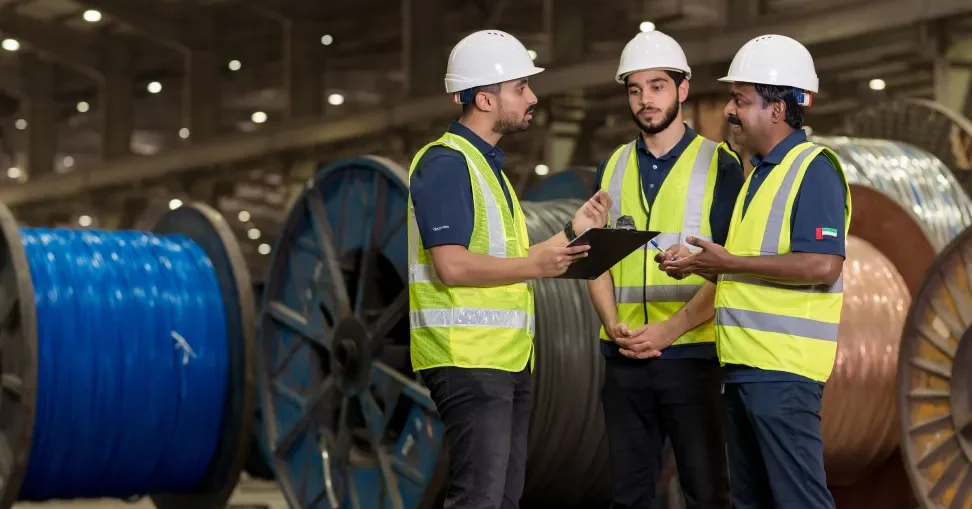
However, long before the grand openings, the dazzling light shows, and the ribbon-cutting ceremonies, a monumental engineering effort takes place deep underground and within the concrete cores of these structures. The true enabler of the UAE’s futuristic ambitions is its advanced electrical cabling infrastructure. To bring tomorrow’s AI-integrated cities and automated industries to life, developers are currently laying millions of kilometers of high-tech wire.
The next generation of UAE real estate is moving far beyond traditional housing. Upcoming developments are fully integrated “Smart Cities” designed with centralized district cooling, autonomous vehicle charging grids, and AI-driven energy management systems.
These highly anticipated districts require a staggering amount of baseline electrical power to function. Standard commercial wiring cannot support the continuous, heavy-duty electrical loads required by these interconnected ecosystems. To ensure that these massive developments open without a hitch and remain resilient for decades, developers partner with top-tier cable suppliers in UAE to lay a robust, high-capacity electrical foundation. By utilizing state-of-the-art Cross-Linked Polyethylene (XLPE) insulated cables, contractors ensure the new grids can withstand the region’s intense summer heat while safely delivering immense voltages to power the communities of tomorrow.
Some of the most exciting upcoming projects in the UAE aren’t just residential; they are massive leaps in Industry 4.0. From highly automated logistics hubs expanding around Jebel Ali to new robotic manufacturing plants and AI-managed vertical farms, the future of UAE industry is autonomous.
In these futuristic facilities, supplying raw power is only half the equation. The machines must communicate flawlessly. While massive power cables act as the “muscles” of a facility, control cables act as the “central nervous system.” They carry the delicate, low-voltage data signals from central computers to robotic arms, automated valves, and safety sensors.
Because these automated zones generate massive electromagnetic fields that can scramble sensitive data, standard wires are useless. To guarantee absolute precision, developers depend heavily on specialized Control Cable Suppliers in UAE to provide heavily shielded auxiliary wiring. These advanced control cables block out electromagnetic interference (EMI), ensuring that the automated “brain” of the facility can execute complex commands with zero lag or error.
The UAE’s upcoming entertainment pipeline is packed with next-generation theme parks, immersive kinetic art museums, and ultra-luxury floating resorts. These venues rely on creating a flawless, uninterrupted magical experience for the guest.
Behind the scenes of that upcoming gravity-defying rollercoaster or AI-powered fountain show is a labyrinth of highly flexible, heavy-duty cables. Entertainment structures feature kinetic (moving) parts that subject wiring to constant vibration and mechanical stress. Using rigid wires would lead to rapid metal fatigue and system failure. Instead, engineers use fine-stranded, elastomeric rubber cables that can bend, flex, and absorb constant motion without ever interrupting the power or the show.
As the UAE marches toward its Net Zero 2050 targets, every upcoming mega-project is designed with sustainability at its core. This means integrating vast rooftop solar arrays, bi-directional power grids, and localized battery storage systems.
This green transition requires a complete rethink of traditional cabling. Upcoming projects are being wired with specialized photovoltaic (PV) solar cables designed to survive decades of blistering UV radiation on rooftops. Furthermore, the internal grids are being built to handle two-way electrical traffic—drawing power from the municipal grid at night and feeding clean, localized solar energy back into the city during the day.
While we eagerly await the launch of the UAE’s next iconic tower or futuristic smart district, it is the silent, unseen electrical infrastructure that ultimately dictates their success. By investing heavily today in premium power transmission, heavily shielded control cables, and climate-resilient materials, the UAE ensures that its upcoming visions of the future will operate flawlessly the moment the doors finally open. The true foundation of tomorrow is the wire we lay today.
Power cables are the heavy-duty wires that carry high voltages to physically drive machinery, light up buildings, and provide raw electricity. Control cables carry very low voltages and data signals; their job is to transmit complex commands between computers, sensors, and the machines they operate.
Automated factories have dozens of heavy machines operating at once, creating an invisible cloud of electromagnetic interference (EMI). If control cables aren’t shielded with copper braiding or metallic foil, this EMI can scramble the data signals, causing robots to malfunction or miss commands.
Standard plastics melt or degrade quickly in the extreme Middle Eastern summer. The cables used in these massive projects are insulated with advanced materials like XLPE (Cross-Linked Polyethylene), which remains thermally stable and safe even when buried in hot sand and carrying heavy electrical loads.
Constant motion and vibration cause standard, rigid copper wires to suffer from “work-hardening,” making them brittle until they snap. For moving structures, engineers use highly flexible cables made of hundreds of hair-thin copper strands encased in durable rubber, allowing them to bend continuously without breaking.
Cables used for solar integration (PV cables) are specifically designed to withstand intense, direct Ultraviolet (UV) radiation without cracking. They are also engineered to efficiently carry Direct Current (DC) from the solar panels before it is converted into Alternating Current (AC) for the building to use.




The UAE has become one of the most attractive destinations in the world for businesses of all sizes. But setting up here involves real decisions: which emirate, which free zone, what license type, how to hire, how to bank. We break down the processes, regulations, and opportunities in plain language — for those who are just exploring the idea and for those already operating on the ground.