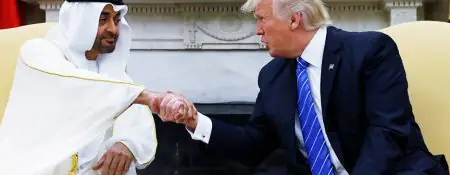
In early 2026, former U.S. President Donald Trump formally launched the Board of Peace, an international initiative designed to promote stability, conflict resolution, and post-war reconstruction with an initial focus on the Gaza Strip. The UAE was among the first nations, along with Saudi Arabia and Bahrain, to accept an invitation to join the Board, signifying the country’s rulers’ commitment to regional peace efforts and deepening strategic ties with global partners.
As the UAE embraces a proactive diplomatic stance in the Middle East, membership in the Board of Peace reflects both its traditional role as a mediator and its ambitions to position itself as a hub for peace-linked economic growth.
The Board of Peace is envisioned as a new platform for international cooperation to manage the reconstruction, governance transition, and stabilization of conflict-affected regions. It is part of a broader 20-point plan proposed by Trump that aims to oversee post-conflict recovery and to support an interim Palestinian technocratic government in Gaza.
Unlike conventional United Nations (UN) mechanisms, this initiative operates under a charter that places the USA at the center of its leadership and decision-making. Participation terms include a standard three-year membership, with opportunities for extended or permanent roles through larger financial commitments.
While the concept has generated debate internationally, the UAE’s early endorsement underscores its strategic calculus in shaping outcomes for the region.
By aligning with the Board of Peace, the UAE strengthens its economic relations with the U.S. and other key global stakeholders. The UAE and United States already maintain robust trade and investment ties, including multi-billion-dollar commercial deals and strategic investment frameworks that span technology, aerospace, energy, and critical-mineral supply chains.
This alignment creates new channels for UAE investment in reconstruction efforts which, if successful, could attract international capital into UAE businesses involved in infrastructure development, logistics, advanced technology, and humanitarian services.
The UAE’s participation signals its ambition to transform peacebuilding into an economic opportunity. Reconstruction of conflict zones typically generates demand for construction, transportation, energy, and financial services – sectors where UAE firms are globally competitive. By participating in the Board of Peace, UAE companies could secure priority roles in contracts tied to regional rebuilding and stabilization projects.
The initiative could help expand the UAE’s financial services ecosystem. Dubai and Abu Dhabi are already major players in global finance; involvement in peace-linked economic frameworks enhances the attractiveness of UAE financial markets for investors seeking stable returns in emerging reconstruction economies.
Participation enhances the UAE’s role as a diplomatic bridge between the West and the broader Middle East. By engaging directly in an international peace forum, Abu Dhabi reinforces its image as a mediator capable of balancing interests among Israel, Palestine, and global powers.
This positioning amplifies the UAE’s voice in shaping regional policies on conflict resolution, reconstruction approaches, and humanitarian strategy frameworks.
Membership in the Board of Peace complements the UAE’s broader international engagement, including past achievements such as the Abraham Accords. It offers a platform from which the UAE can advocate for stability, inclusive governance, and economic renewal – factors crucial for long-term Middle East peace and sustainable development.
The UAE’s engagement with these initiatives supports its longstanding strategic partnership with Washington, reflected in trade, security cooperation, and collaborative investment ventures. As both countries deepen their bilateral relationship, shared leadership in global diplomacy strengthens mutual interests in stability and prosperity across the region.
From a UAE perspective, joining The Board of Peace represents a strategic investment in regional stability, economic opportunity, and diplomatic leadership. By positioning itself at the heart of a new international framework for peace, particularly one focused on post-conflict reconstruction, the UAE strengthens its global profile and reinforces its commitment to peace through action.
With economic horizons tied to reconstruction, investment flows, and expanded trade networks, the Board of Peace could be a catalyst for both prosperity and influence, if managed with foresight, accountability, and collaboration with like-minded partners.